GOOD LIFE PRESENTS: THE INDEPENDENCE PAPERS
Some declarationstake 250 years.
In 1776, thirteen colonies decided the cost of staying was greater than the cost of leaving. Two and a half centuries later, the same arithmetic is being run inside wirehouses, banks, and captive broker-dealers across America.
Open the Papers
Chapter the First · 1765
The Stamp Act
A levy on every document, paid by those who had no voice in setting it. The Crown called it 'a modest contribution to the cost of empire.' Sound familiar?
In 1765, Parliament discovered a beautiful instrument: a tax embedded so deeply in the machinery of daily commerce that protest was almost impractical. Every contract, every newspaper, every playing card — stamped, surcharged, and remitted upward.
The modern advisor knows this instrument well. It is called the payout grid. It is called the platform fee. It is called the ticket charge, the technology assessment, the administrative cost-share. It never appears on a single line item — and that is precisely its elegance.
What follows is a ledger. Run the numbers honestly. The numbers don't lie; they just never make it onto your statement.
Calculated in confidence. Your figures are not recorded, transmitted, or retained. They vanish when you close this page.
The Stamp Tax Ledger
Anno Domini 2026

Chapter the Second · 1773
The Boston Tea Party
It was never really about the tea. It was about being told, one too many times, that the terms were non-negotiable.
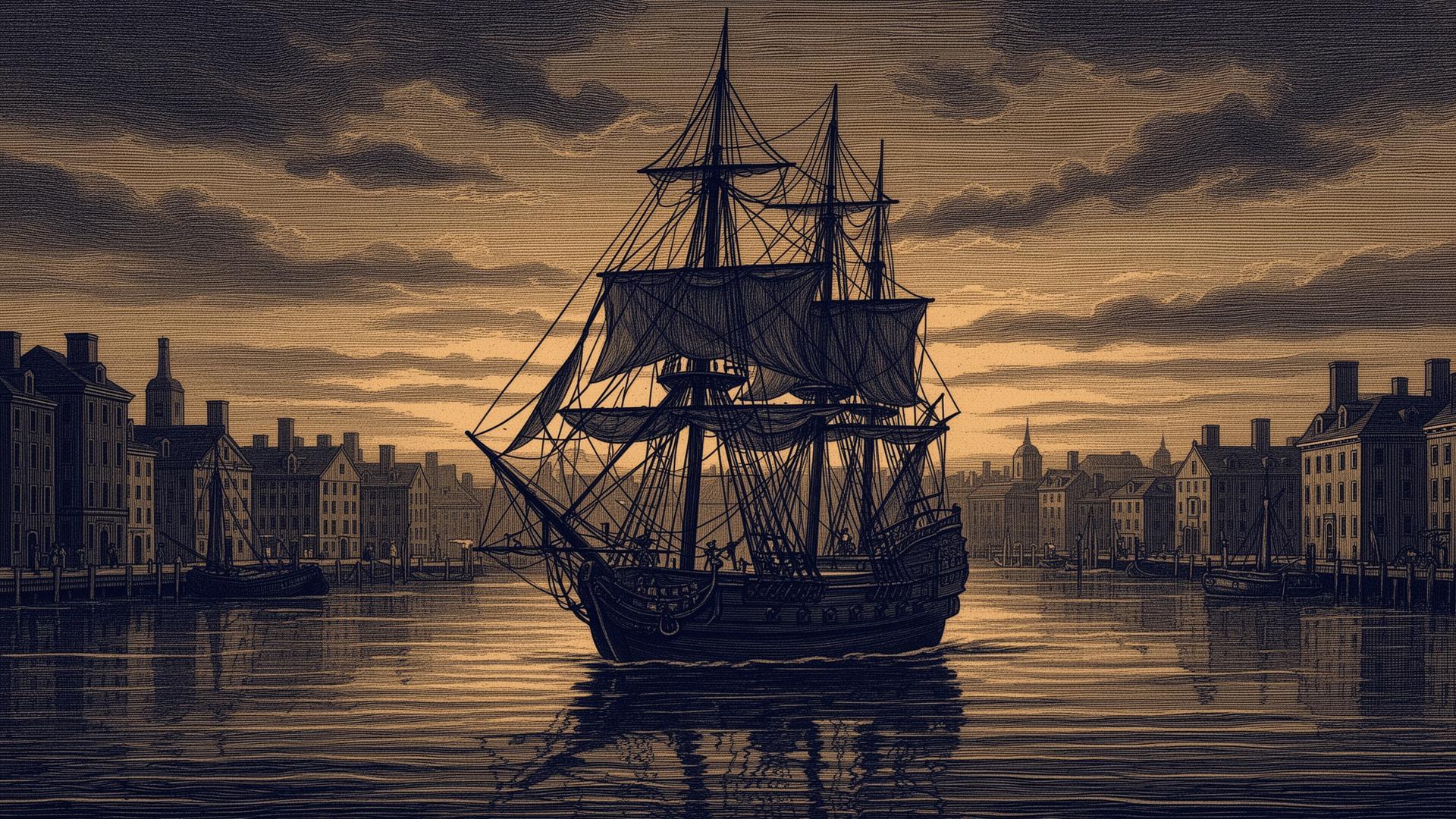
On the night of December 16th, a group of merchants — not radicals, not ideologues, but working professionals — concluded that compliance had become more expensive than resistance. They boarded three ships and emptied 342 chests into the harbor.
Every captive advisor keeps a private inventory of grievances. The product shelf that grows narrower each year. The compliance memo that arrives without a sender. The clawback clause buried on page 47. At some point the inventory becomes a manifest, and the manifest becomes cargo, and the cargo becomes ballast.
Lighten the load.
Crates overboard
0 / 6
The Cargo Manifest
Drag a crate overboard — or tap to toss it.
Chapter the Third · 1776
The Continental Congress
Independence has never been a solo act. It was a convocation — delegates from thirteen colonies, each with their own circumstances, finding common cause.
Good Life Companies is the modern assembly: a coalition of independent advisors who chose to build their practices on their own foundations, with shared infrastructure, real economics, and the freedom to serve clients without a corporate intermediary deciding what counts.
We do not recruit. We convene. If the arithmetic of your current firm no longer reconciles with the practice you intended to build — add your name. Read the dispatches. Talk to those who have made the crossing. The first step is not a leap; it is a signature.
In Convocation
The Declaration
When, in the course of a career, it becomes evident that the structures which once promised opportunity have calcified into obstacle —
When the grid is rewritten without consultation; when the platform fee is levied without recourse; when one's own clients become the property of another's balance sheet —
We, the undersigned, hold these truths to be self-evident: that an advisor's book is their life's work; that the client relationship is sacred and portable; that no firm has a divine right to a percentage in perpetuity.
And so we declare our intent to pursue independence — with prudence, with counsel, and with the full faith and support of Good Life Companies.